
Buy Salmon Fish Online: What Procurement Teams Should Know Before Choosing a Seafood Supplier
A delayed salmon shipment rarely affects only one purchase order. It can interrupt supermarket promotions, restaurant menu planning, food processing schedules, and customer commitments across multiple markets. For procurement teams that Buy Salmon Fish Online, supplier selection has become a strategic business decision rather than a routine transaction.
Global seafood buyers now operate in an environment where traceability, food safety compliance, transportation reliability, and production consistency directly influence profitability. While digital sourcing has simplified supplier discovery, it has also increased the number of intermediaries offering products with varying quality standards and limited production visibility.
Organizations that Buy Salmon Fish Online successfully understand that reliable sourcing depends on much more than competitive pricing. They evaluate production capability, documentation accuracy, cold-chain performance, and long-term supply reliability before placing significant orders. Whether serving retail, foodservice, industrial processing, or wholesale distribution, procurement professionals benefit from working with suppliers that consistently meet commercial expectations while reducing operational risk.
Buy Salmon Fish Online: What a Reliable Salmon Supplier Should Actually Deliver
Companies looking to Buy Salmon Fish Online often compare prices before evaluating supplier capabilities. However, experienced seafood buyers recognize that consistent supply depends on much broader operational performance.
A professional fresh salmon supplier should demonstrate complete control over sourcing, production, quality management, export documentation, and international logistics. Every stage contributes to product integrity before the shipment reaches its destination.
The sourcing process begins with responsible aquaculture practices and carefully managed harvesting schedules. Reliable Salmon exporters maintain strong relationships with approved farming operations to ensure continuous product availability throughout the year.
Processing standards are equally important. Modern facilities should operate under internationally recognized food safety systems, including HACCP implementation, sanitation controls, temperature monitoring, and product inspection procedures. These systems reduce contamination risks while maintaining consistent product specifications.
Export management extends beyond packaging seafood for shipment. Experienced suppliers coordinate customs documentation, veterinary certificates, health certificates, certificates of origin, catch or farming documentation where required, commercial invoices, and shipping documentation according to destination market regulations.
Quality assurance continues throughout production and shipment. Batch inspections, microbiological testing, temperature verification, grading standards, and packaging inspections all contribute to maintaining premium product quality.
International logistics complete the supply chain. A dependable factory direct seafood supplier coordinates refrigerated transportation, container monitoring, customs clearance support, and shipping schedules that preserve freshness from processing facility to customer warehouse.
Buy Salmon Fish Online from Norwegian Suppliers: Why Norwegian Salmon Remains in Demand
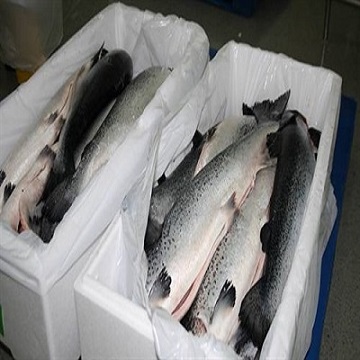
When companies Buy Salmon Fish Online, Norwegian salmon frequently ranks among the preferred sourcing options for global buyers. The country’s seafood industry has established a reputation based on consistent production standards rather than marketing claims.
Norwegian aquaculture operates under strict environmental regulations and food safety controls. Producers follow comprehensive monitoring programs covering fish health, feed quality, water conditions, harvesting procedures, and processing operations.
This regulatory environment contributes to consistent product specifications that procurement teams value when planning long-term purchasing contracts.
Many fresh salmon Exporters Norway have invested heavily in automated processing facilities, advanced grading technologies, and modern cold storage infrastructure. These investments improve production efficiency while maintaining uniform quality across shipments.
Another advantage involves year-round production planning. Unlike many seasonal fisheries, farmed Atlantic salmon supports relatively stable production volumes throughout the year, allowing buyers to secure predictable inventory.
Export reliability also strengthens Norway’s position within international seafood markets. Established shipping routes, experienced export teams, and mature logistics networks help minimize transportation delays for customers throughout North America, Europe, Asia, and the Middle East.
For companies managing multiple distribution channels, this consistency often outweighs small price differences between suppliers.
Buy Salmon Fish Online: Key Buying Factors When Comparing Suppliers
Procurement teams should evaluate suppliers using measurable business criteria instead of relying solely on quotations.
Product Specifications
Every shipment should meet clearly defined specifications covering species, grading, weight ranges, trimming standards, freshness, freezing methods, packaging formats, glazing percentages where applicable, and shelf life expectations.
Precise specifications reduce quality disputes while improving downstream production planning.
Factory-Direct Sourcing
Working with a factory direct seafood supplier improves visibility across the production process. Buyers gain direct communication with processing facilities instead of relying on multiple intermediaries.
Factory-direct sourcing often improves production scheduling, technical discussions, product customization, and issue resolution.
Traceability
Modern seafood sourcing requires complete traceability.
Reliable suppliers should provide information covering farming origin, harvest dates, production batches, processing facilities, packaging dates, and shipment identification.
Comprehensive traceability supports food safety compliance while simplifying recall procedures if required.
Export Documentation
International seafood trade depends on documentation accuracy.
Professional suppliers prepare export certificates, veterinary documentation, health certificates, commercial invoices, packing lists, certificates of origin, and destination-specific regulatory paperwork before shipment.
Documentation errors frequently cause customs delays that compromise delivery schedules.
Cold-Chain Integrity
Temperature control remains one of the most important factors affecting salmon quality.
Reliable suppliers continuously monitor storage temperatures, loading procedures, refrigerated transportation, container performance, and destination delivery conditions.
Cold-chain integrity protects texture, appearance, flavor, and food safety throughout international transportation.
Supply Planning
Experienced suppliers support customer forecasting instead of responding only to immediate purchase requests.
Production planning allows buyers to reserve capacity during seasonal demand increases while reducing inventory uncertainty.
Production Capacity
Processing capacity should align with expected purchasing volumes.
Large buyers benefit from suppliers capable of scaling production without sacrificing quality consistency or delivery performance.
Capacity planning becomes especially important for supermarket promotions and foodservice contracts requiring predictable supply.
Quality Consistency
Consistent quality creates operational efficiency.
Uniform fillet size, color, texture, packaging, and grading reduce production waste while improving customer satisfaction throughout the supply chain.
This consistency distinguishes established wholesale salmon distributors from suppliers that depend on opportunistic sourcing.
Buy Salmon Fish Online: Why Factory Pricing Matters—but Only in Context
Price remains an important procurement metric, but experienced seafood buyers rarely select suppliers based solely on the lowest quotation.
The true financial comparison involves total landed cost.
Lower purchase prices may appear attractive until additional expenses emerge through shipment delays, inconsistent specifications, rejected products, customs issues, or higher transportation costs.
Reliable frozen seafood exporter partners often provide greater long-term value despite slightly higher unit prices.
Procurement professionals should evaluate freight efficiency, documentation accuracy, product yield, packaging quality, inventory reliability, and service responsiveness alongside factory pricing.
Higher-quality products frequently generate better processing yields, lower waste percentages, and stronger customer satisfaction.
These operational advantages often offset modest price differences over the duration of annual purchasing agreements.
Organizations focused on sustainable procurement evaluate supplier performance through total cost ownership rather than purchase price alone.
Buy Salmon Fish Online: How Different Buyers Evaluate Suppliers
Different industries measure supplier performance according to their operational priorities.
Supermarket procurement teams prioritize consistent shelf presentation, standardized packaging, dependable delivery schedules, and uninterrupted product availability. Consumer expectations leave little room for inconsistent inventory.
Restaurants focus heavily on freshness, portion consistency, appearance, and reliable weekly deliveries. Menu planning depends upon suppliers maintaining stable product quality.
Seafood importers evaluate export compliance, customs documentation, logistics coordination, container optimization, and international shipping experience. Their purchasing decisions frequently emphasize risk reduction across multiple markets.
Regional seafood distributor organizations require flexible inventory management, predictable replenishment schedules, and product consistency across numerous customers.
Industrial seafood processors often purchase high volumes under detailed production specifications. Yield consistency, processing efficiency, and long-term production planning become central evaluation criteria.
Regardless of customer segment, companies that Buy Salmon Fish Online increasingly prioritize supplier transparency and operational reliability over short-term pricing opportunities.
Buy Salmon Fish Online: Warning Signs of Unreliable Suppliers
Supplier evaluation should identify potential risks before purchase contracts are signed.
One common warning sign involves vague product origin.
Professional suppliers clearly identify farming locations, processing facilities, production dates, and export documentation. Limited transparency often indicates dependence on multiple trading intermediaries.
Poor documentation represents another significant concern.
Incomplete certificates, inconsistent paperwork, or delayed document preparation frequently create customs complications and shipment delays.
Inconsistent specifications also increase procurement risk.
If grading standards, packaging formats, product weights, or freezing methods vary between shipments, downstream operations become more difficult to manage.
Communication quality deserves equal attention.
Reliable suppliers respond promptly, provide technical information, communicate production updates, and address operational questions without unnecessary delays.
Businesses should also evaluate supply chain structure.
Suppliers relying heavily on intermediaries may experience greater pricing volatility, reduced production visibility, and limited inventory control compared with factory-based exporters.
Strong supplier relationships begin with transparency rather than promises.
Buy Salmon Fish Online Through Long-Term Partnerships Instead of Spot Purchasing
Spot buying occasionally provides short-term opportunities, particularly during periods of favorable market pricing.
However, long-term procurement partnerships generally produce stronger commercial outcomes.
Strategic supplier relationships improve production forecasting, inventory planning, transportation scheduling, and seasonal demand management.
Suppliers can allocate production capacity more effectively when customers provide accurate purchasing forecasts.
This collaboration supports pricing stability while reducing supply disruptions.
Communication also improves over time.
Established business relationships encourage proactive discussions regarding market conditions, logistics challenges, regulatory updates, and production planning.
Long-term cooperation enables suppliers to understand customer specifications in greater detail, reducing operational errors and strengthening product consistency.
Many international buyers now treat supplier partnerships as part of broader supply chain risk management rather than simple purchasing transactions.
Companies such as Aschums Seafood build their model around factory-direct sourcing, premium Norwegian seafood, and export-ready logistics. Their approach reflects the broader industry shift toward dependable partnerships that support international buyers without relying on aggressive sales messaging.
Building a Smarter Procurement Strategy
Global seafood markets continue to evolve as customer expectations, regulatory requirements, and supply chain complexity increase.
Organizations that Buy Salmon Fish Online successfully invest time in evaluating supplier capability beyond pricing alone. Product quality, traceability, documentation accuracy, logistics management, production consistency, and responsive communication all contribute to reliable procurement outcomes.
Working with experienced seafood import supplier partners, established salmon wholesale distributors, reputable Best salmon supplies providers, and dependable frozen seafood wholesale exporters creates stronger operational resilience across the supply chain. Effective seafood sourcing strategies also help every seafood importer secure predictable inventory while managing frozen salmon orders more efficiently.
Ultimately, supplier reliability delivers greater long-term value than the lowest quotation. Consistent quality, dependable exports, and transparent business practices reduce operational risk, strengthen customer confidence, and support sustainable growth across international seafood markets.