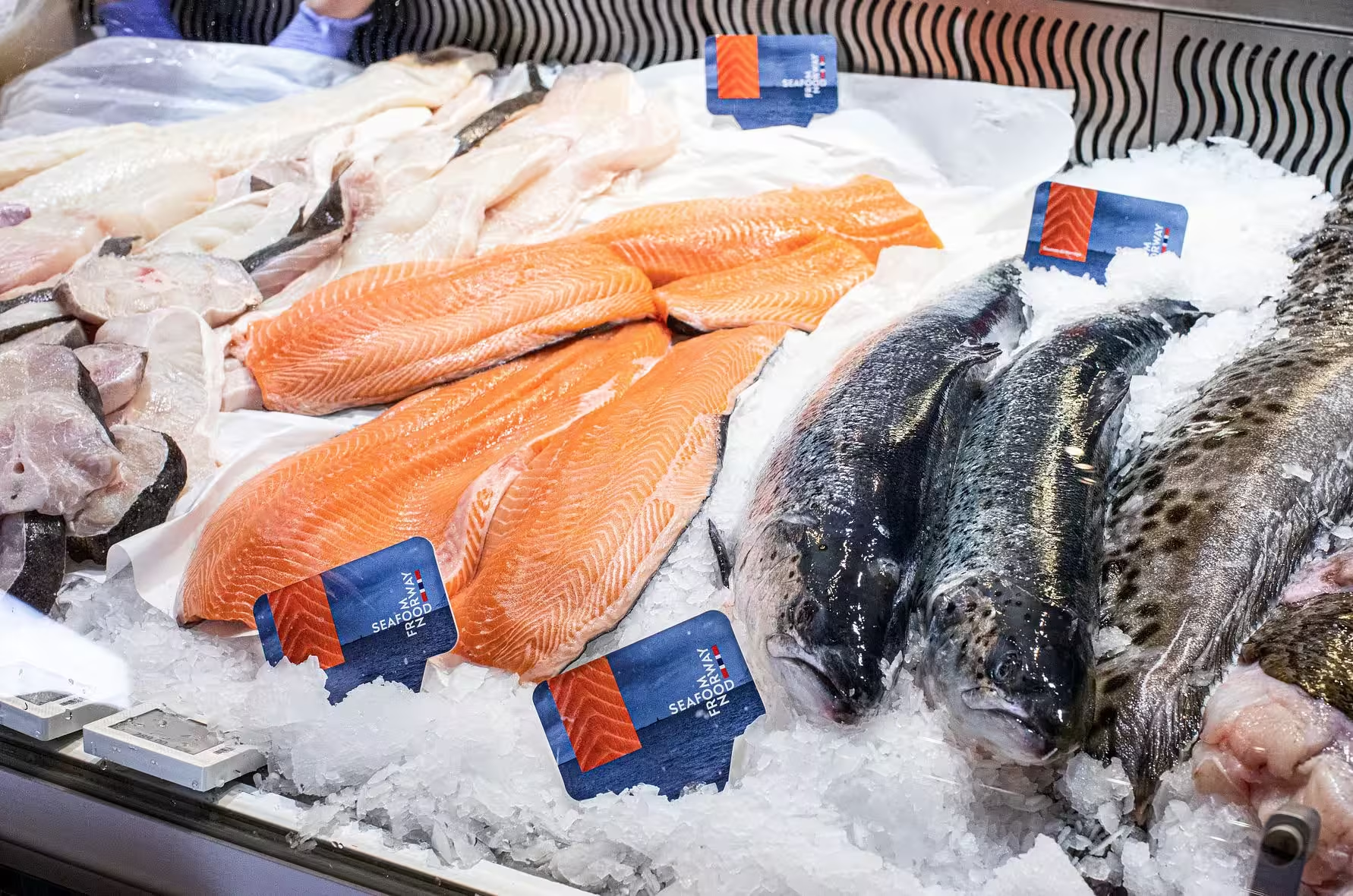
A delayed shipment, inconsistent grading, or incomplete export documentation can disrupt an entire seafood supply chain. Procurement managers understand that sourcing fresh whole salmon for sale involves far more than finding an attractive price. Every purchasing decision influences product quality, customer satisfaction, inventory planning, and long-term profitability.
Successful buyers evaluate suppliers based on production capability, traceability, cold-chain management, and export performance rather than short-term pricing alone. Whether purchasing fresh whole salmon for sale for retail, foodservice, or seafood processing, choosing an experienced export partner reduces operational risk and supports consistent supply. Buyers seeking fresh whole salmon for sale increasingly prioritize suppliers capable of delivering reliable quality, compliant documentation, and predictable logistics throughout the year.
What a Fresh Whole Salmon for Sale Should Actually Deliver
Professional seafood procurement extends beyond purchasing fish. A dependable supplier must provide an integrated export solution that begins with responsible sourcing and ends with successful delivery to the customer’s warehouse.
Reliable sourcing starts with carefully managed Atlantic salmon farms operating under strict animal welfare, environmental, and food safety standards. Healthy fish, controlled feeding programs, and continuous veterinary oversight contribute directly to consistent product quality.
Processing standards are equally important. Fresh salmon should be harvested, chilled immediately, and processed under certified food safety systems. Temperature management throughout grading, packing, storage, and transportation protects freshness while preserving texture and appearance.
Export management includes much more than arranging transportation. Experienced exporters coordinate production scheduling, health certificates, veterinary inspections, customs documentation, commercial invoices, packing lists, certificates of origin, and customer-specific compliance requirements.
Quality assurance remains central throughout the supply chain. Every shipment should be supported by documented inspection procedures, traceability records, and batch identification that allow buyers to verify product origin and processing history.
Finally, logistics determine whether premium salmon arrives in premium condition. Cold-chain integrity from processing facility to destination market protects product quality while reducing waste and commercial disputes.
Why Fresh Whole Salmon for Sale Remains in Demand
Atlantic salmon continues to rank among the world’s most traded seafood products because it combines consistent availability with broad consumer acceptance.
Modern aquaculture has transformed global salmon production by enabling year-round harvesting rather than seasonal supply alone. This consistency allows importers, supermarket chains, processors, and restaurant groups to plan purchasing with greater confidence.
Fresh Atlantic salmon for sale also benefits from well-developed international logistics networks. Major producing countries maintain established export channels that support rapid transportation into North America, Europe, Asia, and the Middle East.
Consumer demand continues to expand because salmon offers versatility across retail and foodservice applications. Whole fish, fillets, portions, smoked products, and value-added items all originate from the same primary raw material.
Fresh farmed salmon has earned a strong reputation through continuous improvements in farming technology, biosecurity, sustainability, and quality management. These developments have increased buyer confidence while supporting stable international trade.
Key Buying Factors When Comparing Suppliers
Selecting the right whole fresh salmon supplier requires evaluating operational capability rather than relying solely on quotations.
Product Specifications
Professional suppliers provide clear specifications covering average weight, grading standards, freshness, harvest date, processing method, packaging configuration, and storage requirements. Consistent specifications simplify purchasing while reducing quality claims.
Factory-Direct Sourcing
Factory-direct procurement often improves transparency by reducing unnecessary intermediaries. Buyers communicate directly with production teams, enabling faster responses to specification changes and production planning.
Traceability
Every shipment should include complete traceability records. Batch numbers, production dates, farming locations, and processing facility identification provide confidence during audits and regulatory inspections.
Export Documentation
International buyers expect accurate documentation that supports smooth customs clearance. Required documents typically include commercial invoices, packing lists, veterinary certificates, health certificates, certificates of origin, and destination-specific compliance documentation.
Cold-Chain Integrity
Temperature control determines shelf life more than almost any other operational factor. Professional exporters maintain uninterrupted refrigeration throughout harvesting, processing, storage, loading, air freight, sea freight, and final distribution.
Supply Planning
Reliable suppliers forecast production capacity months in advance. This planning allows customers to secure supply during seasonal demand peaks without excessive inventory risk.
Production Capacity
Large-scale processing facilities generally offer greater flexibility for mixed container orders, private specifications, and recurring contracts while maintaining consistent lead times.
Quality Consistency
Quality should remain stable across every shipment. Uniform color, texture, size grading, and freshness reduce operational challenges for distributors and processors.
Why Factory Pricing Matters—But Only in Context
Many procurement teams focus heavily on unit pricing when evaluating seafood suppliers. Although competitive pricing remains important, total landed cost provides a much more meaningful measure of purchasing performance.
Freight charges, customs clearance, storage costs, inspection delays, rejected products, and inventory losses can quickly outweigh modest price differences between suppliers.
Lower-priced products sometimes require additional sorting, generate higher customer complaints, or experience shorter remaining shelf life upon arrival. These hidden costs reduce overall profitability despite attractive invoice pricing.
Professional buyers therefore compare suppliers based on total commercial performance rather than price alone. A supplier offering predictable quality, reliable logistics, and complete documentation frequently delivers lower overall procurement costs.
How Different Buyers Evaluate Suppliers
Different market segments prioritize different performance indicators.
Supermarket procurement managers emphasize consistent appearance, attractive presentation, traceability, retail packaging options, and dependable weekly deliveries. Product consistency directly affects consumer satisfaction and repeat purchases.
Restaurant groups focus on freshness, portion yield, predictable sizing, and reliable delivery schedules. Kitchen efficiency depends heavily on receiving products that meet established specifications every time.
Seafood importers examine production capacity, regulatory compliance, export documentation, and long-term supply security. Their purchasing decisions often support multiple downstream customers across different markets.
Wholesale distributors value inventory flexibility, competitive commercial terms, mixed product availability, and responsive customer support. Strong supplier communication becomes particularly important during periods of changing demand.
Seafood processors evaluate raw material consistency above almost every other factor. Uniform fish size, fat content, and flesh quality improve processing efficiency while reducing production waste.
Warning Signs of Unreliable Suppliers
Experienced procurement professionals recognize several indicators that deserve careful investigation before placing large purchase orders.
Vague descriptions regarding production origin often indicate limited supply-chain transparency. Reputable exporters clearly identify farming regions, processing facilities, and product specifications.
Incomplete documentation creates unnecessary customs delays and regulatory risks. Professional suppliers maintain organized documentation processes supported by experienced export teams.
Inconsistent product specifications may indicate weak production controls. Buyers should expect clearly defined grading standards supported by written technical specifications.
Slow or unclear communication frequently predicts future operational challenges. Export transactions require continuous coordination involving logistics providers, customs brokers, inspection authorities, and customers.
Heavy dependence on intermediaries may reduce visibility throughout the supply chain. Direct communication with processing facilities generally improves planning and issue resolution.
Why Long-Term Partnerships Outperform Spot Buying
Transactional purchasing may occasionally reduce short-term costs, but strategic supplier relationships often create greater commercial value over time.
Long-term planning improves production scheduling, allowing processors to allocate harvest volumes more efficiently while maintaining consistent quality.
Stable purchasing agreements support inventory management by reducing uncertainty regarding future supply availability.
Pricing stability also benefits both parties. Suppliers gain production visibility while buyers reduce exposure to sudden market volatility.
Communication improves significantly as business relationships mature. Suppliers better understand customer specifications, packaging preferences, documentation requirements, and seasonal demand patterns.
Continuous collaboration often produces operational improvements that extend beyond pricing, including shorter lead times, customized packaging, and more accurate forecasting.
Understanding Product Quality Beyond Appearance
External appearance provides only part of the quality assessment for premium whole salmon. Procurement teams increasingly evaluate internal quality indicators that influence processing performance and customer satisfaction.
Fresh Norwegian salmon should display firm flesh, bright skin, clean gills, and minimal physical damage. However, experienced buyers also consider fat distribution, flesh firmness, harvest timing, and post-harvest handling procedures.
Temperature monitoring records offer valuable evidence that cold-chain standards remained intact throughout processing and transportation. Reliable exporters willingly provide these records upon request.
Shelf life begins with disciplined harvesting practices rather than transportation alone. Rapid chilling immediately after harvest significantly influences freshness throughout the distribution process.
The Importance of Export Logistics
International seafood trade depends on coordinated logistics involving producers, freight forwarders, customs authorities, airlines, shipping companies, and destination importers.
Fresh whole salmon frequently moves by air freight to preserve maximum freshness for premium retail and foodservice markets. Larger commercial programs may combine sea freight with advanced chilled packaging technologies when transit times permit.
Accurate scheduling minimizes delays that reduce remaining shelf life. Successful exporters coordinate production timing with flight availability, customs inspections, and customer receiving schedules.
Professional logistics management also includes contingency planning for weather disruptions, flight changes, customs inspections, and destination-specific regulatory requirements.
Sustainability and Responsible Supply
Sustainability has become an increasingly important purchasing criterion across international seafood markets.
Responsible salmon producers invest in environmental management, fish welfare, efficient feed utilization, and continuous monitoring of farming conditions.
Traceability systems provide transparency from farm to customer while supporting regulatory compliance and responsible sourcing commitments.
Many buyers also consider supplier investment in food safety certifications, environmental programs, employee training, and continuous quality improvement when selecting long-term partners.
Market Outlook for Fresh Salmon Wholesale
Global demand for bulk fresh whole salmon continues to expand across retail, hospitality, foodservice, and seafood processing sectors.
Growth in international cuisine, healthier dietary preferences, and premium retail offerings has strengthened consumption across mature and emerging markets alike.
At the same time, procurement standards continue to become more demanding. Buyers increasingly expect complete traceability, standardized specifications, reliable documentation, and dependable export performance.
Suppliers capable of combining production expertise with disciplined logistics remain well positioned to support this evolving market.
Companies such as Aschums Seafood build their model around factory-direct sourcing, premium Norwegian seafood, and export-ready logistics. This approach illustrates how operational capability can create value beyond simple product availability without relying on aggressive sales messaging.
Conclusion
Purchasing fresh whole salmon for sale is ultimately a supply-chain decision rather than a simple product transaction. Successful procurement depends on consistent quality, transparent sourcing, reliable documentation, disciplined cold-chain management, and experienced export coordination.
Whether sourcing fresh Atlantic salmon for sale, fresh gutted salmon, or premium whole salmon for wholesale distribution, buyers benefit most from suppliers that consistently meet technical specifications and international compliance requirements.
Competitive pricing will always influence purchasing decisions, but supplier reliability determines long-term commercial success. Consistent quality, predictable logistics, and trusted partnerships reduce operational risk, strengthen customer relationships, and create greater value than selecting the lowest-priced offer alone.