
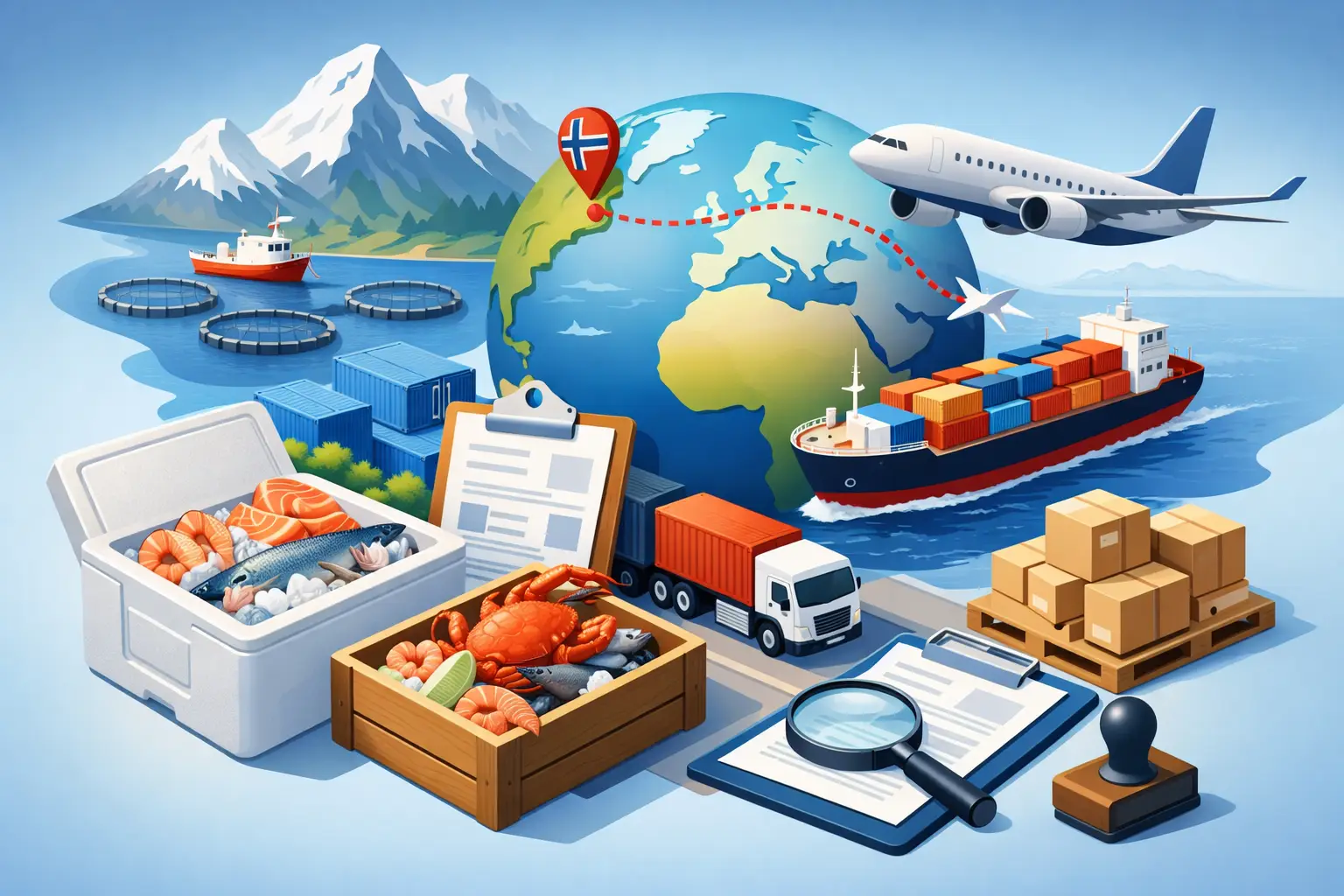
If your margin depends on consistent quality, stable supply, and products that arrive in saleable condition, learning how to import seafood from Norway starts with one practical decision – choosing a supplier that is built for export, not just local sales. Norwegian seafood has strong market pull in the US and globally because buyers associate it with clean waters, disciplined handling, and premium species across fresh, frozen, smoked, live, and dried categories. But origin alone does not protect your business. The real difference is whether your supplier can deliver the right specifications, documentation, packaging, and cold chain performance shipment after shipment.
How to import seafood from Norway without costly mistakes
Commercial seafood importing is not complicated because the fish is Norwegian. It becomes complicated when the product spec is vague, shipping terms are unclear, or the paperwork does not match what customs, FDA review, or your warehouse expects. Buyers who import successfully tend to treat the process as a supply chain operation first and a sourcing exercise second.
That means you need clarity on species, form, volume, timing, storage conditions, labeling, and market destination before you place an order. A buyer importing frozen Atlantic cod for distribution has different requirements than a restaurant supplier bringing in fresh salmon fillets, and both operate differently from a specialty retailer importing stockfish or smoked products. Norway can supply all of these categories at a high standard, but the right export setup depends on your channel.
Start with product-market fit, not just price
Many importers begin by asking for a quote. That makes sense, but price only matters after the product is properly defined. In seafood, a low quote can hide a mismatch in glaze percentage, grading, pack size, trim standard, catch season, or shelf life at dispatch. Those details affect yield, resale value, and claims risk.
Before you request pricing, define the commercial spec in plain terms. Identify the species, whether you need fresh, frozen, live, smoked, or dried product, preferred sizes or weight ranges, packaging format, required labels, and expected monthly or seasonal volume. If you serve retail, labeling and presentation may matter as much as cost per pound. If you serve foodservice or processing, yield and pack efficiency may drive the decision.
This is where an export-oriented Norwegian wholesaler adds value. A supplier that works with commercial buyers should be able to discuss fillet sizes, whole round options, frozen block or IQF formats, crab section grading, roe handling, and suitable pack configurations for your market. That conversation protects your margin better than chasing the lowest first offer.
Choosing the right Norwegian seafood supplier
If you want to know how to import seafood from Norway with fewer disruptions, look closely at the supplier’s export readiness. A strong supplier does more than offer premium fish from the pristine waters of Norway. They should show that they can support repeat international shipments with dependable quality control and responsive communication.
Ask direct questions. Can they supply the product year-round, or is availability seasonal? Do they source directly from trusted fishermen and processors? Are they experienced with US and international wholesale documentation? Can they load according to your pallet, carton, and temperature requirements? If there is a quality issue, who handles the claim and how quickly?
A broad catalog can also be a commercial advantage. Importers often start with one core line such as salmon, cod, mackerel, or shellfish and later expand into higher-margin specialties like king crab, langoustines, cod roe, smoked salmon, or traditional Norwegian stockfish. Working with one dependable source across multiple categories can simplify buying and improve container economics, though mixed loads are not always the best choice for every temperature profile or shelf life target.
Check consistency, not just capability
Nearly every exporter can ship one good order. Experienced buyers want to know whether the supplier can perform over time. Ask for current production lead times, realistic minimum order volumes, and how they manage substitutions if a requested size grade is short. Good exporters answer clearly. Weak ones stay vague until after payment.
Consistency matters especially in premium channels. If your customers expect a certain cod loin cut, crab size, or smoked profile, spec drift can damage your account faster than a late shipment. Reliable Norwegian suppliers understand that wholesale buyers are protecting downstream relationships, not simply purchasing boxes.
Documentation, compliance, and import controls
Seafood imports into the US require discipline. The product itself may be excellent, but if the documents are incomplete or inconsistent, delays can eat into shelf life and cash flow. Exact requirements depend on product type, destination, and importer setup, but in general you should expect to coordinate commercial invoices, packing lists, health or catch-related documents where applicable, and product labeling that aligns with the shipment.
You also need to be prepared on the importer side. That usually means working with a customs broker, making sure your prior notice and FDA-related processes are handled correctly, and confirming that the product description, weights, and packaging details match the paperwork exactly. Fresh and frozen seafood do not leave much room for documentation errors.
This is one reason many buyers prefer established export partners. A supplier used to bulk seafood export will understand how important accurate carton counts, net and gross weights, production dates, storage instructions, and origin statements are to a clean clearance process. If your business imports multiple product types, it is wise to standardize your document review before goods depart Norway rather than trying to solve discrepancies after arrival.
Shipping methods and cold chain control
The best Norwegian seafood loses value quickly if the cold chain slips. Your import plan should match the product’s risk profile. Fresh seafood often moves by air because transit time is part of the value proposition. Frozen, smoked, and dried products are more commonly moved by sea when volume supports it, though timing, port routing, and storage capacity still matter.
Air freight can support premium freshness and shorter lead times, but your landed cost will be higher and delays can become expensive fast. Sea freight generally improves unit economics for bulk supply, especially for frozen lines, but you need a supplier that packs correctly, loads efficiently, and maintains temperature discipline from origin through handoff. Live seafood adds another level of complexity and should only be handled with a supplier experienced in that category.
Ask how the product is packed, what temperature range is maintained, and how shipments are monitored. For frozen products, carton strength, pallet stability, and loading practices matter more than many first-time importers realize. For fresh products, dispatch timing relative to harvest or processing can be as important as the flight itself.
Incoterms and risk allocation
A lot of disputes in seafood trade come from assumptions about who is responsible for what. Make sure the sales terms are explicit before payment. You should know when risk transfers, who books freight, who arranges insurance, and who absorbs extra charges if there is a delay, inspection hold, or temperature-related issue.
There is no single best term for every buyer. Some importers want more control and use their own logistics partners. Others prefer a more managed export arrangement from the supplier side. It depends on your experience, receiving infrastructure, and leverage with carriers and brokers.
Pricing the shipment the right way
When buyers ask how to import seafood from Norway profitably, the answer is rarely found in the raw product quote alone. You need the landed cost. That includes product cost, freight, customs-related expenses, cold storage, inland transportation, insurance, handling loss, and any expected shrink or yield impact.
For premium Norwegian seafood, the key question is not whether the product is the cheapest. It is whether the quality, origin, and consistency support better resale performance. In many channels, they do. Retailers can command a premium on trusted Norwegian origin. Foodservice buyers may accept a higher case cost if fillet quality, presentation, and consistency reduce waste and complaints. Specialty distributors often find that authentic Norwegian products such as stockfish, smoked seafood, and premium shellfish create category differentiation that cheaper alternatives cannot.
Still, it depends on your market. If you sell into highly price-sensitive volume accounts, a premium line may need to sit beside a more economical option. A good supplier should be able to discuss where premium sourcing truly adds value and where standardization matters more than prestige.
Build the first order to test the relationship
Your first shipment should not be designed to impress anyone. It should be designed to reveal how the supplier performs. Start with a commercially meaningful order size, but one that your team can inspect, store, and move without pressure. Confirm specifications in writing, approve packaging details, and align on lead time before production begins.
When the goods arrive, check more than appearance. Review carton condition, count accuracy, label consistency, weights, temperature on receipt, glaze if relevant, and whether the product matches the agreed spec. Then measure how the supplier responds after delivery. Fast, practical communication after the sale is one of the strongest signals of a dependable long-term partner.
For buyers looking for premium Norwegian seafood across crab, salmon, cod, mackerel, smoked products, roe, and dried specialties, Aschums Seafood AB is positioned around exactly that export-oriented wholesale model: direct sourcing strength, broad species coverage, and practical support for commercial supply.
The buyers who succeed in this trade usually keep one principle in mind: import seafood from Norway for reliability first, then scale for margin. When your supplier protects quality, documents accurately, and ships with care, growth becomes much easier to manage.