
When a buyer asks for Atlantic cod wholesale, they usually are not looking for a fish. They are looking for supply consistency, clean specifications, stable pricing logic, and product that lands in market ready to move. For importers, distributors, and foodservice suppliers, Atlantic cod is a core line item that has to perform commercially as well as technically.
Norwegian Atlantic cod remains one of the strongest options for buyers who need dependable volume with premium market appeal. It carries recognition across retail, hospitality, and wholesale channels, and it fits a wide range of programs, from frozen fillets and whole fish to portions, loins, and traditional dried products. The key is not simply finding cod. The key is buying from a wholesale partner that understands export, grading, handling, and long-term supply planning.
Why Atlantic cod wholesale stays in demand
Atlantic cod holds its position because it works across multiple sales environments. It has broad consumer acceptance, a mild flavor, a firm flaky texture, and menu flexibility that suits both value-driven and premium channels. A distributor can place it with restaurants, seafood counters, institutional kitchens, and specialty retailers without having to explain the product from scratch.
That commercial flexibility matters. Some species perform well in one channel and stall in another. Cod is different. It can be packed as whole round fish for processing, sold as frozen fillets for retail, portioned for foodservice, or positioned in premium formats where origin and quality justify stronger margins. For buyers managing inventory risk, that versatility helps.
There is also a branding advantage in Norwegian origin. Seafood buyers know the value of cold, clean waters, disciplined fisheries management, and established export systems. Premium sourcing is not just a story for the end customer. It affects shelf life, yield, appearance, and confidence in every shipment.
What commercial buyers should look for in Atlantic cod wholesale
Not all wholesale cod programs are built the same. The strongest supply relationships start with clarity on product form and end-use. A restaurant supplier may prioritize consistent portion size and glazing standards. A processor may care more about whole fish grading, catch timing, and fillet yield. A retailer may focus on appearance, pack format, and how the product performs after thawing.
That is why detailed specifications matter from the first conversation. Buyers should confirm whether they need fresh or frozen cod, whole fish or fillets, skin-on or skinless, boneless or pin bone-in, and what weight ranges fit their market. Glaze percentage, packaging style, pallet configuration, labeling, and temperature control also deserve attention early, not after a quote is accepted.
Quality control is another point that separates a serious supplier from a trading middle layer. Cod should be handled carefully from landing to packing. Texture, color, moisture retention, and presentation all reflect the standard of the chain behind the product. A low headline price can lose its appeal quickly if the shipment arrives with inconsistent grading or weak shelf performance.
Product formats that fit different markets
In wholesale trade, cod is rarely a one-format business. Different markets demand different cuts, and the right supplier should be able to support that range.
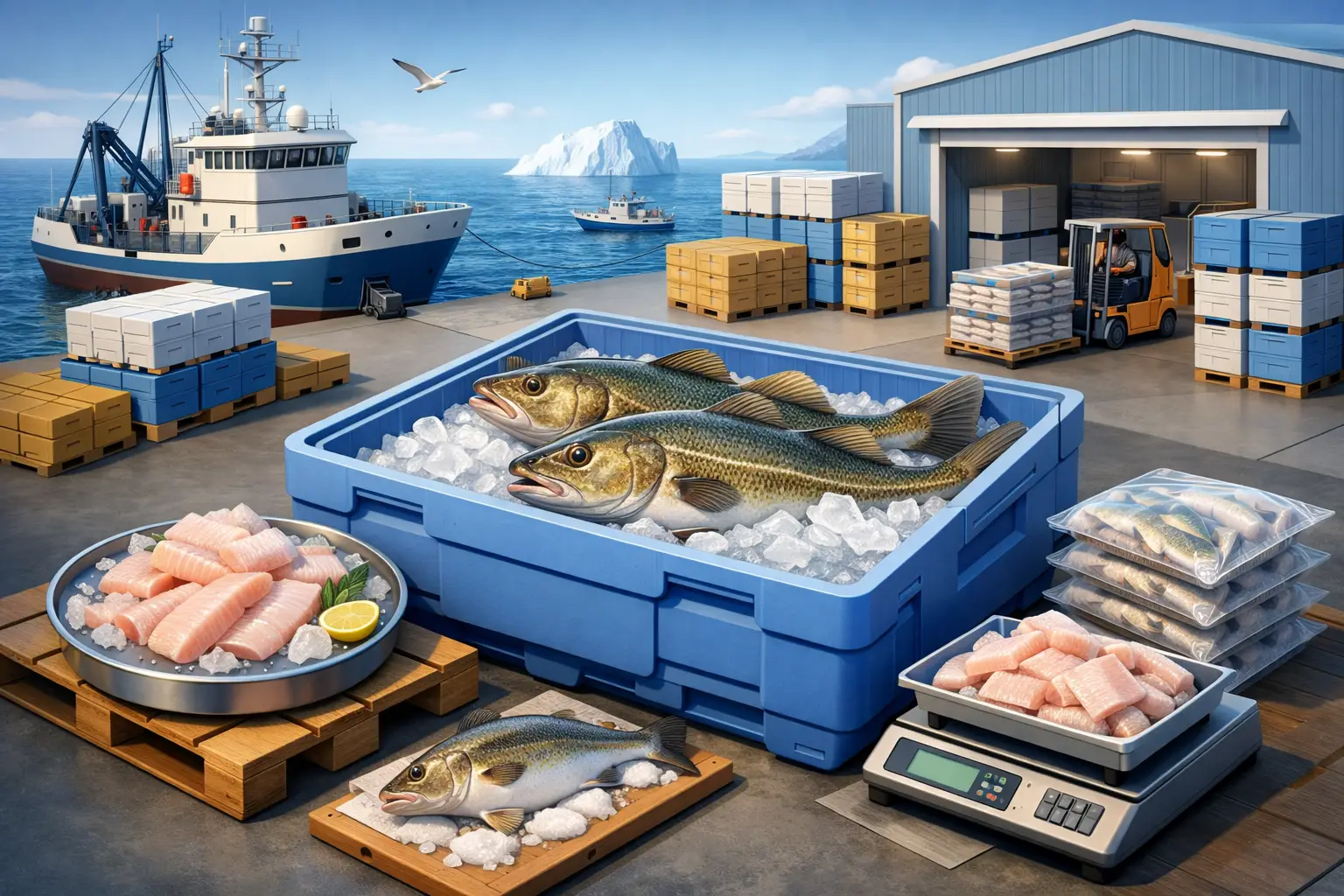
Whole Atlantic cod is often the preferred format for buyers with in-house processing or local market requirements. It gives more control over cutting and allows processors to manage yield according to local demand. For some importers, this format also supports better flexibility on pricing and downstream product planning.
Frozen fillets remain one of the most practical formats for broad distribution. They reduce labor for the end user, simplify inventory handling, and work well across retail and foodservice. For premium programs, loins and center cuts can command stronger pricing when presentation matters. These are especially relevant for hospitality buyers serving customers who expect a clean plate appearance and consistent eating quality.
Fresh cod has strong appeal, but it requires tighter logistics and sharper sales planning. It can be a strong option for regional distribution or premium restaurant supply where turnover is fast. Frozen cod often offers a better balance for international buyers because it protects quality over longer transport windows and provides more purchasing flexibility.
Smoked and dried cod products serve a different segment but remain commercially valuable. Buyers supplying ethnic markets, specialty retailers, or traditional cuisine channels often need access to these formats from experienced Norwegian exporters who understand both product quality and export documentation.
Sourcing from Norway brings practical advantages
Norway has earned its reputation in seafood for a reason. Buyers sourcing Atlantic cod from Norwegian waters benefit from strong fisheries oversight, experienced harvesters, and established cold-chain infrastructure. That supports a higher level of predictability, which matters when customers downstream expect the same product every week.
Traceability is another advantage. In international seafood trade, origin claims need to be supported by reliable documentation and a supplier that takes compliance seriously. Responsible harvesting is not just a marketing phrase in wholesale. It affects buyer confidence, customer acceptance, and the ability to serve markets with strict sourcing expectations.
For many commercial buyers, Norway also signals premium value. That helps in sales conversations. Whether the end customer is a restaurant group, fish counter, or distributor network, Norwegian cod carries a quality perception that supports market positioning.
Price matters, but value matters more
Every wholesale buyer watches price, and rightly so. Atlantic cod is a competitive category, and margins can tighten quickly. But in seafood, the cheapest offer is not always the best buy.
A stronger wholesale program creates value through consistency. If sizing is right, yield is reliable, and the product arrives in good condition, buyers spend less time solving problems and more time selling. Missed specs, weak packing, and variable quality create hidden costs that rarely show up on the first invoice.
The better approach is to compare total buying value. That includes product quality, available volumes, responsiveness, packaging accuracy, export readiness, and how well the supplier communicates around lead times and market shifts. Serious buyers usually prefer a dependable partner over a one-off low quote.
There are also timing considerations. Cod pricing can move with seasonality, catch conditions, logistics costs, and demand from key import markets. Buyers who plan ahead often secure better terms than those entering the market late and buying under pressure.
Export readiness is not optional
A supplier may have access to good fish and still fail as a wholesale partner if export execution is weak. International buyers need more than product availability. They need commercial discipline.
That means proper packing standards, dependable documentation, clear communication, and realistic shipment planning. It also means understanding customer requirements by market. A US importer may need different labeling, packing details, or compliance support than a buyer serving foodservice in another region.
Export-ready seafood supply should feel controlled from quote to delivery. Buyers need to know what they are getting, when it will ship, and how it will arrive. That level of reliability is especially important for cod because it is often a repeat-order product tied to standing customer demand.
Building a long-term Atlantic cod wholesale program
The best cod business is repeat business. Buyers who build a long-term supply relationship usually get better continuity, better communication, and a supplier that understands their product mix over time. That matters when market conditions tighten or when demand shifts between formats.
A strong partner will help align supply with your sales model. If your business serves restaurant distributors, portion consistency and inventory planning may be the priority. If you supply retail, consumer-friendly cuts and attractive pack presentation may matter more. If you operate in bulk processing, volume and raw material quality may lead the discussion.
This is where a dedicated Norwegian exporter such as Aschums Seafood AB can add practical value. The focus is not on selling one-off boxes. It is on supplying premium Atlantic seafood with the quality control, sourcing strength, and export orientation that commercial buyers expect.
Choosing the right supplier for Atlantic cod wholesale
A good buying decision usually comes down to a few hard questions. Can the supplier provide the product forms your market needs? Can they support consistent volume? Are they clear about origin, handling, and specifications? Can they deliver competitive wholesale pricing without sacrificing quality?
The right answer is rarely based on one factor alone. A supplier with premium Norwegian sourcing, broad product availability, and responsive service is often better positioned than a trader working opportunistically across mixed sources. Cod is too important a category to leave to chance.
For buyers serving demanding retail, foodservice, and distribution channels, Atlantic cod should be sourced with the same discipline used for any serious center-of-plate protein. When quality is right, specifications are clear, and supply is dependable, cod becomes more than a product line. It becomes a stable part of a profitable seafood program.
If you are buying for scale, the smart move is to choose a wholesale partner that treats cod as a year-round commercial commitment, not just another item on a price sheet.