Live Fresh & Frozen Crabs for Sale: How to Choose the Best Crabs


Live Fresh & Frozen Crabs for Sale: How to Choose the Best Crabs
Buying commercial crab requires more than comparing prices. Buyers must evaluate species, condition, origin, packing, handling, documentation, and delivery reliability.
For seafood importers and wholesalers, these details directly affect product quality and margins. Restaurant groups also need consistent sizing and dependable supply.
That is why choosing the right Live Fresh & Frozen Crabs for Sale requires a structured procurement process.
Live crabs need careful handling from harvest through delivery. Frozen crabs also require strong temperature control and suitable packaging.
Furthermore, seafood buyers must consider their customers, menu requirements, storage capacity, and distribution model.
This guide explains the key factors that professional buyers should review before placing a crab order.
Why Crab Quality Matters in Commercial Seafood
Crab is a premium seafood category with strong demand across restaurants, retailers, distributors, and foodservice operations.
However, crab quality can decline quickly when handling standards are poor.
FAO guidance notes that crabs can deteriorate faster than fish under similar conditions. It also recommends careful handling of live crabs.
Therefore, procurement teams should examine the entire supply chain.
The process starts with harvesting and continues through sorting, packing, transportation, receiving, and storage.
A supplier should also understand the difference between live, chilled, cooked, and frozen crab products.
Each format has different logistics requirements.
For example, live crab depends heavily on vitality and careful transport. Frozen products depend more heavily on freezing performance and temperature stability.
As a result, buyers should never judge quality from appearance alone.
Choosing the Right Crab Species
Species selection should match your market and final application.
Common commercial categories include king crab, snow crab, blue crab, and Dungeness crab.
Each species offers different characteristics in size, meat yield, flavor, availability, and price.
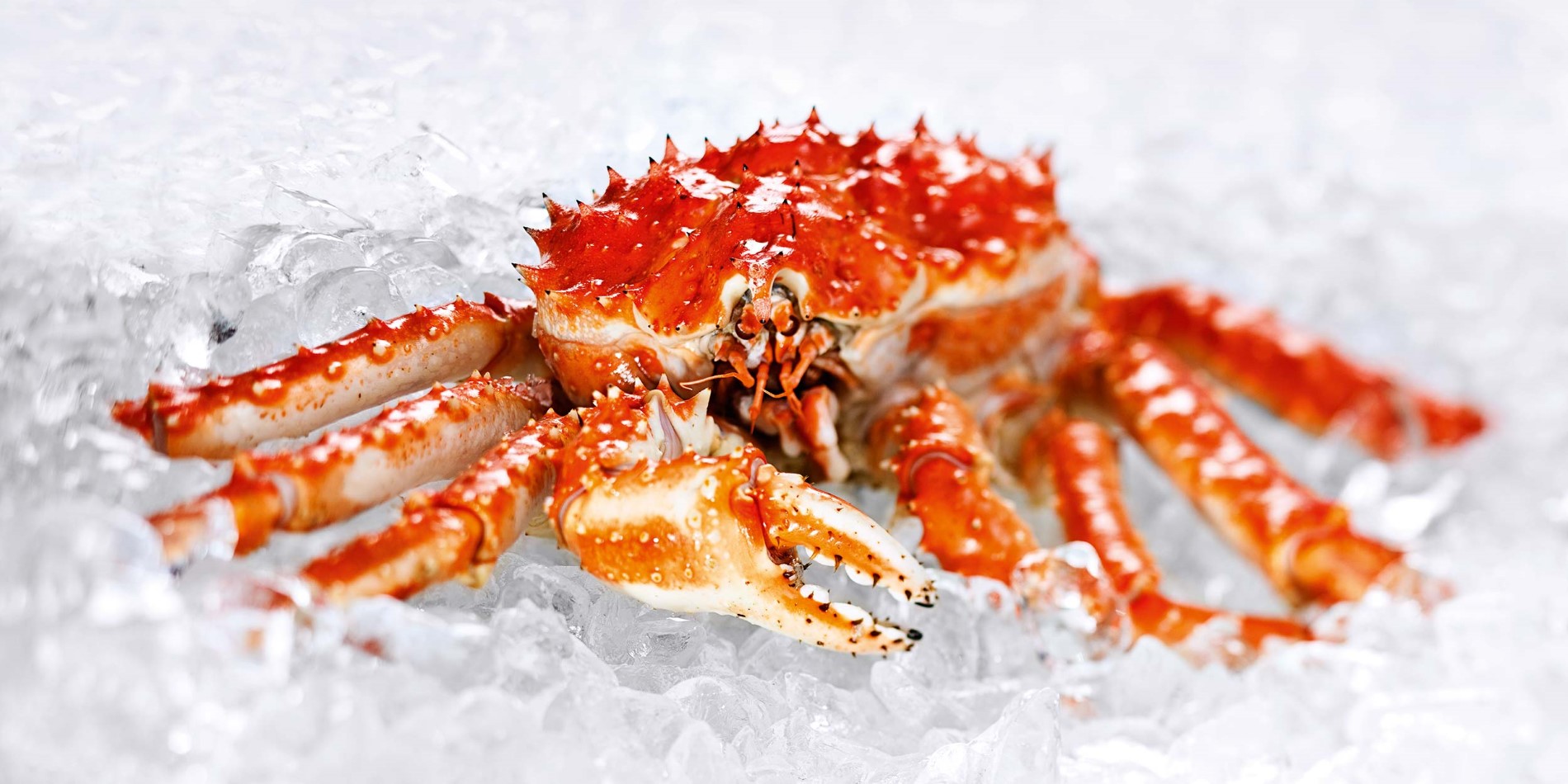
King Crab
King crab occupies the premium end of many seafood markets.
Its large legs and substantial meat portions make it popular with restaurants and specialty retailers.
However, buyers should specify the exact species and product form.
They should also confirm size grades, origin, packing format, and available quantities.
Snow Crab
Snow crab is widely used in foodservice and retail applications.
It can work well for crab legs, clusters, and prepared seafood dishes.
Frozen snow crab can also provide more predictable inventory planning.
Therefore, it can suit buyers who need longer storage and consistent supply.
Blue Crab
Blue crab has strong recognition in several regional seafood markets.
Buyers seeking Live Blue Crabs for Sale should pay close attention to vitality and handling.
NOAA Fisheries identifies blue crab as a commercially important species in the United States.
The market may also distinguish between hard-shell and soft-shell products.
Therefore, buyers should define their required product specification before requesting quotations.
Dungeness Crab
Dungeness crab is another established premium crab category.
It can serve restaurant, retail, and specialty seafood markets.
However, availability varies by fishery, season, region, and regulatory conditions.
Therefore, buyers should confirm current supply before planning large promotional campaigns.
Live Crab or Frozen Crab?
The best format depends on your business model.
Live crab can provide a strong premium proposition for restaurants and seafood specialists.
However, live products require more complex logistics.
The shipment needs appropriate temperature control, ventilation, handling, and rapid delivery.
FAO guidance recommends careful transport practices because live crabs remain vulnerable to stress and physical damage.
Frozen crab offers a different advantage.
It allows buyers to maintain inventory for longer periods while supporting planned distribution.
Therefore, frozen products can work well for wholesalers, supermarkets, processors, and foodservice distributors.
When comparing Fresh Crabs for Sale with frozen options, consider more than purchase price.
Review expected yield, storage costs, freight requirements, shelf life, customer demand, and product specifications.
What to Check When Buying Live Crabs
Professional buyers should establish clear receiving specifications.
First, confirm that the supplier can provide healthy and active crabs.
Weak or damaged animals can create unnecessary losses.
FAO guidance specifically recommends selecting live, healthy crabs for transport.
Next, review the packing method.
The packaging should protect the crabs while supporting suitable environmental conditions.
Also, avoid unnecessary handling during loading and unloading.
Crab legs and appendages can break easily.
FAO notes that physical damage can increase infection risks and weaken live crabs.
Therefore, careful handling should form part of your supplier evaluation.
Buyers should also ask about:
-
Harvest location
-
Harvest date
-
Species identification
-
Size range
-
Average weight
-
Live arrival expectations
-
Packaging method
-
Transit duration
-
Transport temperature
-
Mortality policy
-
Replacement terms
-
Export documentation
These details help procurement teams compare suppliers objectively.
What to Check When Buying Frozen Crab
Frozen crab requires a different quality checklist.
Start by confirming the product form.
It may include whole crab, clusters, legs, sections, meat, or processed portions.
Next, confirm the freezing method and storage conditions.
The product should remain within the supplier’s specified frozen temperature range throughout distribution.
International seafood handling guidance emphasizes maintaining frozen products without thawing during transport.
Therefore, buyers should request temperature-control information when appropriate.
Packaging also matters.
Look for strong cartons, suitable inner packaging, accurate labels, and clear lot identification.
Also check for excessive ice buildup.
Heavy glazing can affect the effective product yield and purchasing economics.
Buyers should therefore compare net weight and glaze specifications.
They should also examine color, odor, shell condition, meat condition, and signs of freezer damage after receiving samples.
Why the Cold Chain Matters
The cold chain protects seafood quality from harvest through final delivery.
It includes refrigeration, freezing, storage, transportation, receiving, and monitoring.
A break at any stage can affect quality and safety.
The FDA describes HACCP as a preventive system that identifies and controls biological, chemical, and physical hazards.
Seafood processors and distributors should therefore work with suppliers who understand HACCP principles.
The FDA also provides specific guidance for hazards and controls involving fish and fishery products.
For commercial buyers, this means asking practical questions.
For example, ask how the supplier monitors temperatures during transportation.
Also ask how receiving inspections document product condition.
Strong suppliers should have defined procedures rather than relying on informal checks.
How to Evaluate a Crab Supplier
Price matters, but it should not become the only selection criterion.
A low quotation can become expensive after losses, rejected shipments, delays, or inconsistent quality.
Instead, evaluate suppliers across several categories.
Product consistency
Can the supplier repeatedly meet your required species, size, grade, and packaging?
Consistency matters greatly for restaurant chains and supermarket procurement teams.
Supply capacity
Can the supplier support your expected volume?
Also ask how the supplier handles seasonal supply changes.
Documentation
International buyers should review available commercial and food safety documentation.
Depending on the market, this may include health certificates, origin documents, product specifications, and inspection records.
Logistics
Ask about transit times, shipping methods, temperature controls, and delivery procedures.
Furthermore, confirm how the supplier handles delays.
Communication
Fast communication can prevent small logistics issues from becoming expensive problems.
Therefore, choose a supplier with clear commercial communication and responsive support.
Buying Fresh and Frozen Seafood Online
Digital purchasing has changed how seafood buyers source products.
However, buyers should perform proper supplier due diligence before placing commercial orders.
When you Buy Fresh Crabs Online, request product specifications and current availability.
Also request photographs or videos when appropriate.
For live products, ask about recent harvest timing and transportation plans.
When you Buy Frozen Crabs Online, request packing details and frozen storage information.
You should also confirm minimum order quantities and delivery options.
For international orders, review the destination country’s import requirements.
Furthermore, confirm whether the supplier can provide the documents needed for customs clearance.
Online ordering becomes much safer when buyers treat the process like traditional procurement.
The website starts the conversation.
However, specifications, samples, documentation, and logistics verification support the final purchasing decision.
Should You Search for Crab Near Your Location?
Search terms such as Fresh Crab for Sale Near Me and Frozen Crab for Sale Near Me can help identify nearby suppliers.
However, local proximity does not automatically mean better quality.
A nearby supplier may offer faster delivery.
Meanwhile, an international specialist may offer broader species selection or larger commercial volumes.
Therefore, compare suppliers based on your actual procurement requirements.
Consider freight costs, delivery time, product quality, documentation, and order volume together.
For large buyers, total landed cost often matters more than the initial product price.
How Samples Help Professional Buyers
Samples provide useful evidence before a larger purchase.
They allow procurement teams to assess product specifications before committing to significant volume.
For live crab, inspect vitality, shell condition, physical damage, and size consistency.
For frozen crab, inspect packaging, glazing, shell condition, meat appearance, and freezer damage.
Also evaluate the thawed product when your operation requires it.
Record your findings using the same checklist for every supplier.
This creates a consistent comparison process.
Furthermore, samples can reveal differences between supplier claims and actual product condition.
Building a Reliable Crab Procurement Specification
A written specification reduces misunderstandings.
Your document should identify the exact product you want.
Include:
-
Species
-
Product form
-
Live or frozen status
-
Size or weight range
-
Origin
-
Harvest requirements
-
Packaging format
-
Net weight
-
Glazing percentage
-
Storage requirements
-
Label requirements
-
Delivery destination
-
Required documentation
-
Acceptable quality limits
Restaurant chains should also include portion and presentation requirements.
Processors may need additional technical specifications.
Supermarkets may require specific labeling and retail packaging.
Therefore, customize the specification to your operation.
A strong specification also makes supplier quotations easier to compare.
Sustainability and Traceability Matter
Modern seafood procurement increasingly considers responsible sourcing.
Buyers should understand where their crab comes from and how the fishery operates.
Traceability can also support customer confidence and internal quality management.
Ask suppliers for information about origin and responsible sourcing practices.
Furthermore, request supporting documentation when sustainability claims affect purchasing decisions.
Do not rely solely on generic statements such as “sustainably sourced.”
Instead, ask for specific information about the fishery, certification, or sourcing program.
This approach supports more transparent procurement.
Common Mistakes When Buying Crab
Several mistakes can reduce profitability.
First, buying based only on the lowest price can create quality problems.
Second, failing to define product specifications can produce inconsistent shipments.
Third, ignoring transport conditions can damage live and frozen products.
Fourth, overlooking documentation can create customs or receiving problems.
Fifth, ordering large volumes without testing samples can increase commercial risk.
Finally, failing to discuss rejection procedures can create disputes later.
Therefore, establish expectations before confirming the purchase order.
A Practical Crab Buying Checklist
Before ordering, ask these questions:
-
What exact species am I buying?
-
Is the product live, chilled, cooked, or frozen?
-
What size grade do I need?
-
What is the expected net weight?
-
Where was the crab harvested?
-
How was it handled after harvest?
-
How will it be packed?
-
How will temperature be controlled?
-
What documents accompany the shipment?
-
What happens if the shipment arrives damaged?
-
Can I receive a sample first?
-
Can the supplier support my required volume?
This checklist helps turn a general seafood inquiry into a professional procurement process.
Why Supplier Transparency Builds Trust
Reliable seafood trade depends on transparency.
A supplier should communicate product details clearly.
The buyer should also communicate requirements clearly.
This two-way process reduces misunderstandings and supports long-term relationships.
For international seafood traders, transparency becomes even more important.
Different markets can have different documentation, labeling, inspection, and import requirements.
Therefore, both parties should confirm requirements before shipment.
Choosing the Right Live Fresh & Frozen Crabs for Sale
The right crab depends on your customers, application, logistics, and procurement goals.
Live crab can suit premium restaurants and specialist seafood markets.Live Fresh & Frozen Crabs for Sale
Frozen crab can support inventory planning and broader distribution.
Meanwhile, different species can target different price points and customer expectations.
Therefore, start with your product specification.
Then evaluate suppliers against quality, traceability, logistics, documentation, and consistency.
Do not judge a supplier by price alone.
Instead, consider the full cost of receiving, storing, distributing, and selling the product.
A reliable supplier should support your operation beyond the initial transaction.
Final Thoughts
Finding dependable Live Fresh & Frozen Crabs for Sale requires a commercial approach.
Buyers should assess species, freshness, vitality, freezing, packaging, traceability, and cold-chain performance.
They should also verify documentation and supplier capabilities before placing large orders.
Furthermore, sampling provides a practical way to validate product claims.
For importers, wholesalers, distributors, processors, supermarkets, and restaurant groups, consistency matters.Live Fresh & Frozen Crabs for Sale
The strongest procurement decisions combine product quality with reliable logistics and transparent communication.
When these factors work together, crab buyers can build stronger supply chains and protect product value.
As a result, choosing the right crab becomes less about finding the cheapest shipment.
Instead, it becomes about finding the right product, specification, supplier, and delivery model for your market.