Buying King Crab Legs Wholesale With Confidence

A king crab menu feature can command attention before the first plate leaves the kitchen. The shell arrives vivid and substantial, the meat is snowy white, and the flavor delivers the buttery richness diners expect from a premium seafood experience. But buying king crab legs wholesale is not simply a matter of finding the lowest price per pound. For restaurants, retailers, distributors, and importers, the real purchase decision comes down to species, origin, pack style, cold-chain handling, usable yield, and confidence that the next order will meet the same standard.
Norwegian king crab has earned a strong reputation among buyers who want a product with visual impact and succulent sweetness. When sourced responsibly and packed correctly, it gives chefs and seafood counters a high-value item that needs very little embellishment. The procurement work happens long before service: choosing a supplier that can document the product, protect it in transit, and communicate clearly about quantities and export requirements.
What to Look for in King Crab Legs Wholesale Orders
The first question is not always how many cases you need. It is what, exactly, is inside each case. King crab legs may be sold cooked and frozen, raw and frozen, or as clusters that include the leg sections and shoulder. Each format serves a different operation.
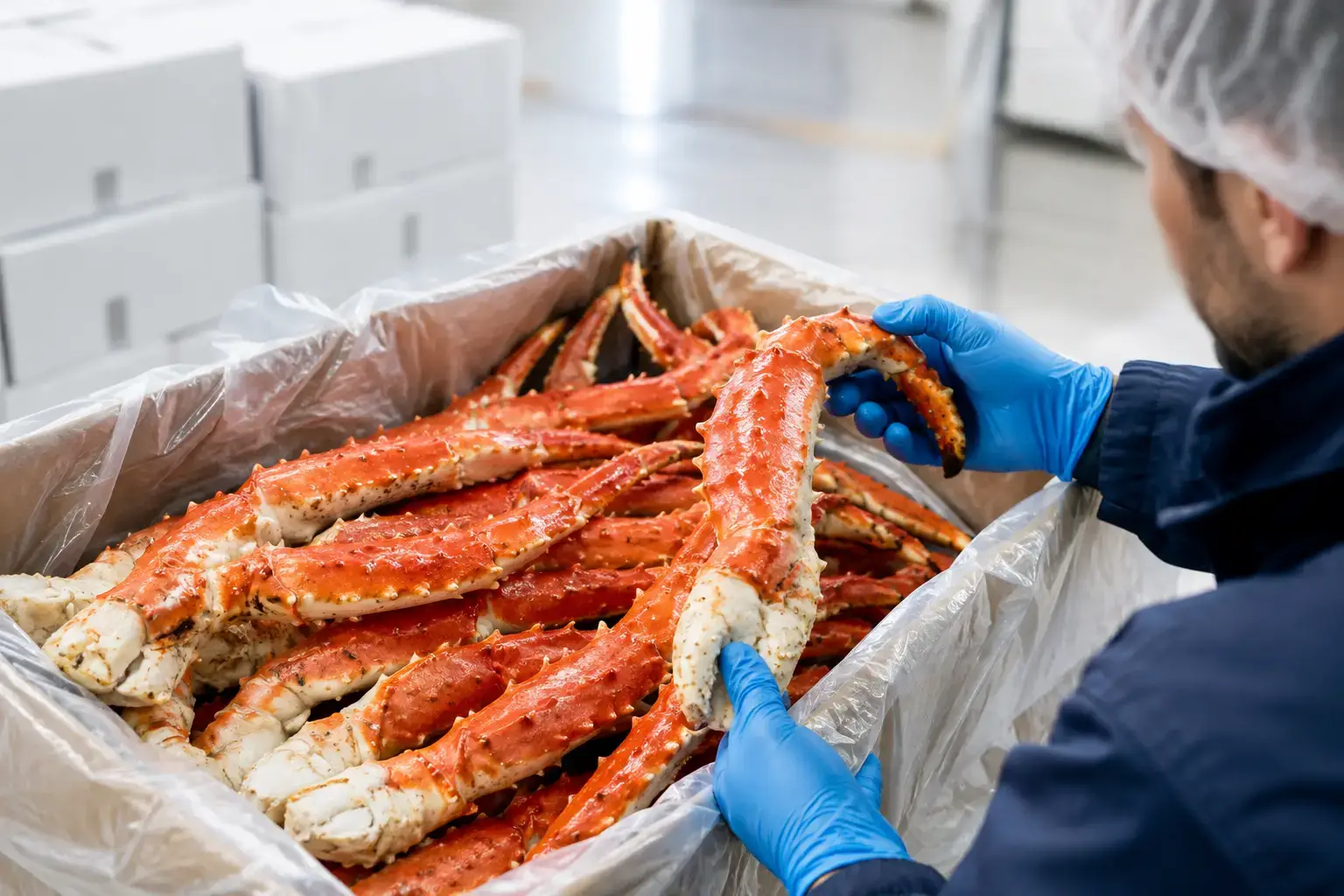
Cooked, frozen king crab legs are the practical choice for many restaurants, caterers, and retailers. The crab is cooked close to harvest, then frozen to preserve its natural texture and clean ocean flavor. Your kitchen team is primarily reheating rather than cooking from raw, which helps reduce labor, shortens ticket times, and makes portion control easier during busy service. For a retail counter, this format also gives customers a familiar, approachable product for home entertaining.
Raw king crab can suit specialist buyers who have the equipment, staff knowledge, and menu concept to cook it precisely. It offers more control, but it also requires more careful handling. The savings can disappear if thawing, preparation, or cooking is inconsistent. For most high-volume programs, ready-to-serve cooked legs provide a better balance of quality, speed, and predictable results.
Ask whether the stated weight is net weight, glazed weight, or a total case weight that includes packaging. Glazing is a normal protective layer of ice on frozen seafood, but buyers should understand how it affects usable product cost. A clear specification sheet should identify the species, origin, processing method, size range, pack configuration, storage temperature, and best-before information.
Size, count, and menu value
King crab is commonly graded by size, and size affects far more than plate presentation. Larger legs create the dramatic centerpiece many luxury restaurants and event caterers want. They are also easier for guests to crack and share. Smaller sizes can be an intelligent choice for seafood boils, mixed platters, buffets, and retail promotions where the goal is to offer premium crab at a more accessible price point.
Do not evaluate size in isolation. Compare the number of clusters per case, average cluster weight, expected meat yield, and your intended serving size. A larger cluster may cost more upfront but reduce plating labor and support a higher menu price. A smaller cluster may fit a promotional offer better, particularly if it is paired with shrimp, lobster, salmon, or other high-margin seafood.
For chefs, it helps to build a test plate before committing to a recurring wholesale program. Weigh a thawed cluster, measure the usable meat for your preparation, and calculate the serving cost against your target food cost. This turns an attractive market price into a decision grounded in your own menu economics.
Why Norwegian Origin Matters
Origin is not a decorative detail on a seafood label. It speaks to the supply chain behind the product. Buyers increasingly need to know where seafood was harvested, how it was processed, and whether the supplier can provide the documentation required for their market.
Norwegian king crab is valued for cold, clean waters and a fishing industry built around monitored harvests and traceability. Responsible sourcing supports the long-term availability of the resource while giving commercial buyers a clearer procurement story to share with customers. For a specialty grocery store, documented origin can help distinguish your seafood case. For an importer or distributor, it can support internal compliance and customer due diligence.
Traceability should be treated as a working business requirement. Before placing a substantial order, request product details that match your needs, including harvest origin, processing location, lot identification, health certificates where applicable, and export documentation. Requirements differ by destination and by customer type. A U.S. restaurant may have different needs than an international importer arranging customs clearance, so the right supplier will discuss the order rather than offer a one-size-fits-all promise.
Certified fisheries and responsible fishing practices matter for commercial reasons as well as environmental ones. They help protect supply continuity in a category where demand is high and availability can change with season, quotas, weather, and logistics. Sustainability is strongest when it is supported by clear records, not vague language.
Cold-Chain Handling Protects the Eating Experience
King crab is a premium product, and poor temperature control can quickly undermine its value. Freezer burn, excessive ice buildup, broken shells, and moisture loss can all affect the customer experience and your margin. The goal is to receive crab that looks impressive in the case and tastes sweet, tender, and clean on the plate.
Choose wholesale king crab legs packed for the journey they will actually take. For frozen shipments, insulated packaging and dependable temperature management are essential. For export orders, packaging must protect the product through handling points that may include trucking, air freight, ocean freight, warehouse transfer, and customs inspection. A strong cold chain is not glamorous, but it is the difference between a premium delivery and an expensive disappointment.
At receiving, inspect the outer cartons before signing off. Look for damage, signs of thawing and refreezing, or unusual ice accumulation. Confirm case labels against the purchase order, then move product immediately into appropriate frozen storage. Keep inventory organized by lot and date so older stock is used first.
Thawing deserves the same attention. Thaw king crab legs slowly under refrigeration, ideally in a covered tray that captures condensation. Avoid leaving crab at room temperature or rushing the process with hot water. Gentle reheating by steaming, baking, or grilling preserves the delicate texture. The product is already flavorful, so a little clarified butter, lemon, garlic, or a light seasoning is usually enough.
Buying for Restaurants, Retail, and Distribution
A restaurant buyer may prioritize consistent cluster sizes, dependable delivery windows, and product that reheats quickly during service. A seafood retailer may care more about attractive shells, clear labels, and pack sizes that move well during weekends and holidays. Distributors need reliable volume, export-ready paperwork, and a supplier able to communicate honestly when market conditions shift.
That is why wholesale purchasing should begin with a practical conversation about your operation. Share your anticipated order volume, preferred format, target size, delivery destination, storage capacity, and whether the crab is for foodservice, retail resale, or further distribution. If you are planning around a holiday, banquet season, or major promotion, discuss timing early. King crab demand often increases around celebrations, and waiting for the final week can limit your options.
Price matters, but the lowest quote is not always the lowest landed cost. Consider freight, packaging, product protection, import handling, storage losses, portion yield, and the operational cost of inconsistent sizes. A supplier that provides stable specifications and responsive support can protect margins more effectively than a cheaper product that creates complaints or waste.
Smaller buyers should not assume wholesale crab is reserved only for national chains. Flexible order discussions can help specialty markets, independent restaurants, and caterers obtain premium seafood in quantities that make sense for their business. Larger procurement teams, meanwhile, benefit from customized quotes and coordinated export arrangements built around recurring demand.
Questions Worth Asking Before You Order
Before confirming a purchase, ask how the crab was processed, whether it is cooked or raw, how it is graded, and how much glazing is included. Confirm minimum order quantities, available pack sizes, lead times, storage requirements, and documentation for your destination. If the order is crossing borders, clarify who manages each stage of export coordination and what information is needed before shipment.
It is also wise to ask what happens if availability changes. King crab is a wild, high-demand seafood product, so flexibility matters. A dependable supplier will be direct about current stock, expected replenishment, and suitable alternatives if your preferred size is temporarily limited.
Aschums Seafood AB works with buyers seeking Norwegian-origin seafood supported by careful sourcing, secure packaging, and service tailored to both smaller purchases and larger export orders. The best wholesale relationship is not built on a single case price. It is built on product knowledge, clear specifications, and deliveries that allow you to serve king crab with confidence every time.
When king crab reaches the table with its shell intact, its meat tender, and its origin clearly understood, it becomes more than a premium ingredient. It gives your customers a reason to return for the next unforgettable seafood meal.