
A buyer comparing king crab vs snow crab is usually not deciding between two similar items. You are choosing between two different value propositions – one built around size, premium positioning, and menu impact, and the other around accessibility, volume movement, and wider price flexibility. That distinction matters whether you supply foodservice, retail, or international distribution.
For commercial buyers, the right crab is rarely about which species is “better.” It is about fit. Product format, target margin, portion economics, customer expectations, and supply consistency all shape the decision. When you look at king crab and snow crab through a wholesale lens, the differences become much more practical.
King crab vs snow crab: the core difference
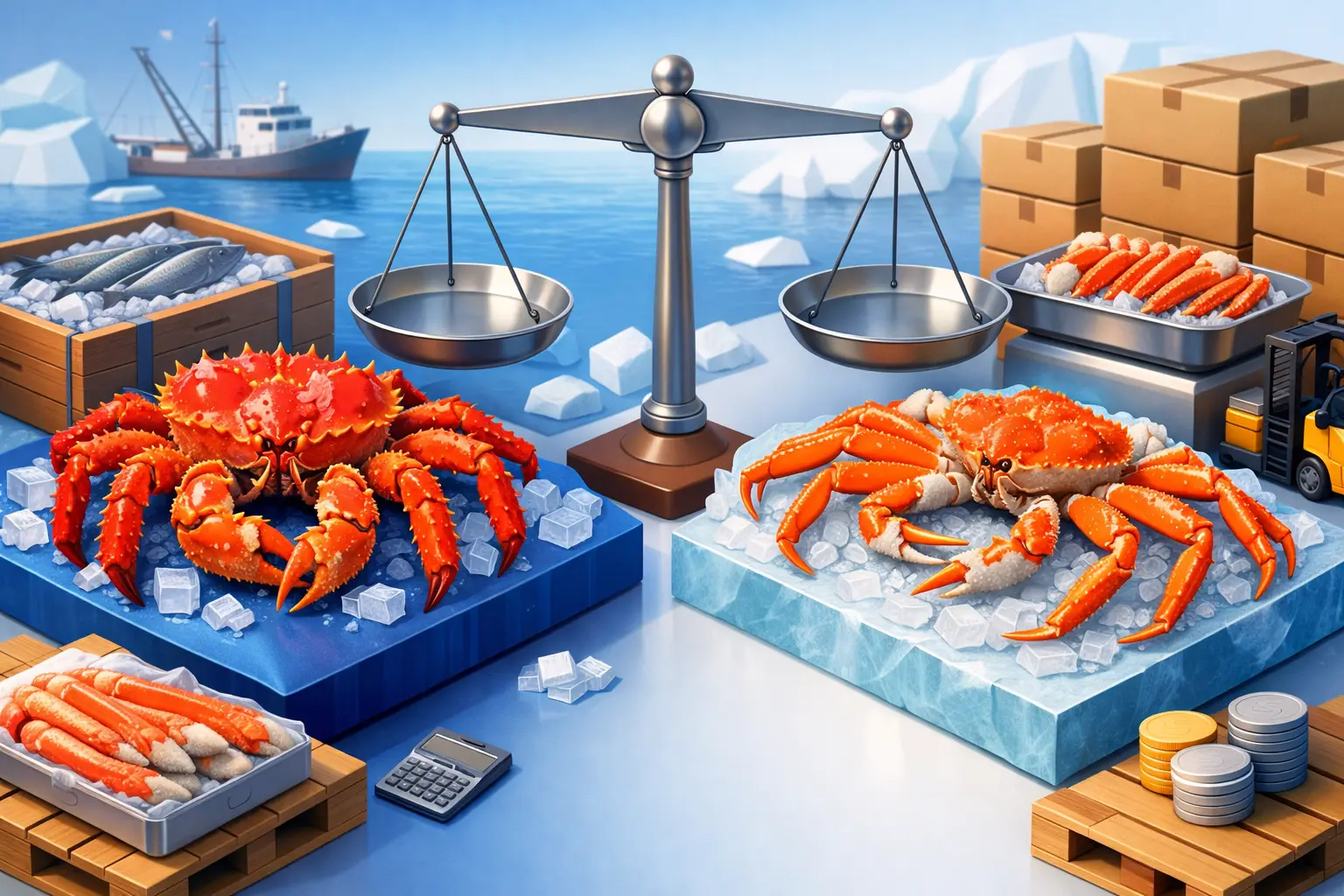
King crab is the larger, more premium-looking product. It is known for thick legs, high visual appeal, and a richer eating experience that supports elevated menu pricing and premium seafood counters. Snow crab is smaller, easier to position across a broader range of price points, and often better suited to high-turnover retail and foodservice programs.
That gap starts with appearance. King crab legs are substantial and immediately recognizable, which gives them strong merchandising value. Snow crab clusters are slimmer and more approachable for customers who want crab at a lower spend per serving. In a wholesale setting, that visual difference directly affects how each product performs in restaurants, seafood markets, and promotional retail activity.
Texture is another separator. King crab meat is firmer and meatier, with a more pronounced bite. Snow crab meat is more delicate, string-like, and slightly softer. Both are premium products when properly handled, but they serve different end uses.
Flavor and eating quality
If your buyers are asking about flavor first, the answer depends on the channel. King crab typically delivers a sweeter, richer, more luxurious profile. It is the product many high-end restaurants prefer for plated presentations, seafood towers, and premium surf-and-turf offers because the meat carries strong standalone appeal.
Snow crab is also sweet, but lighter and more subtle. That makes it versatile. It works well in mixed seafood platters, casual dining crab boils, buffet applications, and retail packs where consumers want a familiar crab experience without paying king crab pricing.
Neither profile is universally superior. King crab has stronger premium pull, but snow crab often reaches a broader customer base. For distributors serving multiple segments, that distinction matters more than personal taste.
Yield, shell structure, and labor considerations
Buyers also need to think beyond flavor. King crab generally offers larger sections and a more substantial meat pickup per leg. That can reduce perceived effort for the end customer and improve plate presentation. In foodservice, larger leg portions can support a cleaner premium offer with less assembly at the table.
Snow crab has a different advantage. While the legs are smaller, the product is familiar and efficient in many casual and mid-tier dining formats. It fits all-you-can-eat promotions, combo platters, and value-driven seafood programs where portion control matters.
There is a trade-off, though. Snow crab can require more cracking effort for the same overall meat experience, which may affect guest perception in premium settings. King crab usually creates a more straightforward luxury presentation, but at a higher cost base.
Pricing and market positioning
For most importers and wholesalers, pricing is where king crab vs snow crab becomes a business decision rather than a product preference. King crab sits in the higher-value category. It supports premium positioning, but it also demands buyers with the customer base and sales strategy to move it effectively.
That premium can be an advantage if your market values exclusivity, larger portions, and strong visual appeal. Fine dining suppliers, luxury retailers, and specialty seafood distributors often see king crab as a traffic-driving item that lifts average order value and brand perception.
Snow crab usually offers more flexibility. It is easier to merchandise across broader retail and foodservice segments, and it can work well in markets where customers are price-aware but still willing to trade up for premium seafood. For volume-driven buyers, snow crab often provides more room for promotion and repeat sales.
This does not mean snow crab is simply the budget option. In many programs, it is the more commercially efficient product. The right species depends on whether your customer is buying status, portion value, or broad menu usability.
Product formats and buying specs
Commercial buyers should evaluate the format as carefully as the species. Both king crab and snow crab are commonly traded frozen, with cooked and ready-to-serve options often preferred for export efficiency and handling consistency. For bulk buyers, glaze, pack size, leg size grading, and cluster presentation all affect value.
King crab is often purchased for its large leg sections and premium visual standard. Buyers should pay close attention to sizing because the difference between acceptable and impressive can directly affect resale potential. Large-format product performs best where presentation drives demand.
Snow crab is frequently bought in clusters and can be easier to integrate into routine distribution programs. It works across foodservice and retail because it supports different pack configurations and more flexible portioning. If your business serves several customer types, snow crab may offer easier inventory turnover.
Origin and processing also matter. Norwegian and North Atlantic sourcing can strengthen product credibility, especially for buyers who need clean origin stories, responsible harvesting claims, and export-ready quality control. That is particularly relevant in premium channels where provenance supports price.
Which crab works best for restaurants?
Restaurants tend to choose based on menu identity. If the goal is to create a premium signature item, king crab usually has the stronger case. It looks expensive because it is expensive, and guests understand what they are paying for. That makes it effective for special occasion dining, seasonal promotions, and premium seafood presentations.
Snow crab fits better when the restaurant needs consistent seafood appeal at a more manageable food cost. Casual seafood houses, buffet operators, hotel banquets, and boil concepts often benefit from its balance of familiarity and margin potential.
There is also an operational question. Premium restaurants may accept a higher input cost because king crab supports stronger menu pricing. High-volume operators may prefer snow crab because it allows them to move more covers without overextending menu price thresholds.
Which crab works best for retail and distribution?
Retailers usually need a sharper balance between customer appeal and sell-through. King crab performs well in premium seafood counters, holiday promotions, and upscale frozen assortments where consumers are shopping for a special meal. It can be a strong image product, but slower-moving if local demand does not support the premium.
Snow crab is often easier to scale in retail. It suits frozen sections, family meal occasions, and routine seafood promotions. Distributors serving chain retail or mainstream foodservice may find snow crab easier to move consistently across regions and buyer profiles.
For importers, the decision often comes down to portfolio strategy. King crab can elevate the range. Snow crab can broaden the customer base. Many serious seafood buyers need both, but not in the same volumes.
Supply, seasonality, and risk
Crab buying is never only about demand. Supply conditions, quota changes, harvest timing, logistics, and cold chain performance all affect the commercial result. King crab can offer exceptional value in the right market window, but it may involve tighter supply and sharper pricing swings. Buyers need a supplier that communicates clearly on availability, specs, and shipment planning.
Snow crab can also face supply pressure, but it is often the more practical option for buyers who need regular movement and dependable volume. Even so, assuming one species is always easier to source is risky. Market conditions change quickly, especially in export trade.
This is where supplier strength matters. A dependable Norwegian seafood partner with direct access to trusted fishermen and processors can reduce risk through better planning, quality control, and transparent product specifications. For buyers managing inventory across multiple markets, reliability is worth as much as headline price.
King crab vs snow crab: how to choose
If your customers are premium-focused, presentation-driven, and willing to pay for larger leg sections, king crab is usually the stronger fit. If your program depends on broad appeal, repeat purchase potential, and more flexible price positioning, snow crab often makes more commercial sense.
Some buyers make the mistake of treating these products as interchangeable. They are not. King crab is a premium statement item. Snow crab is a versatile volume performer. Both can be profitable, but only when matched to the right channel, format, and customer expectation.
At Aschums Seafood AB, that is how we view the category – not as a simple species comparison, but as a sourcing decision tied to market demand, product quality, and dependable export supply. The best crab for your business is the one your customers will reorder, your margins can support, and your supply chain can trust.
A smart crab program starts with knowing what your market actually wants, then buying with enough discipline to keep quality and pricing aligned.